
Michael’s Grass Care Update for July 7 — Houston Grass, Arcola, TX
Houston summers are hard on lawns, and July is when the phone calls start rolling in. In this week’s video update, Michael Romine of Houston Grass covers the two problems Houston-area homeowners are asking about most right now — gray leaf spot and chinch bugs — plus a watering rule that helps prevent both. He also shares good news for anyone who’s been waiting on Cobalt St. Augustine.
Watch the full video above, or read on for the details.
Quick Answers for Busy Homeowners
What’s attacking Houston lawns in July 2026? Gray leaf spot fungus (brought on by a wet May and June followed by summer humidity) and chinch bugs (which thrive when lawns dry out).
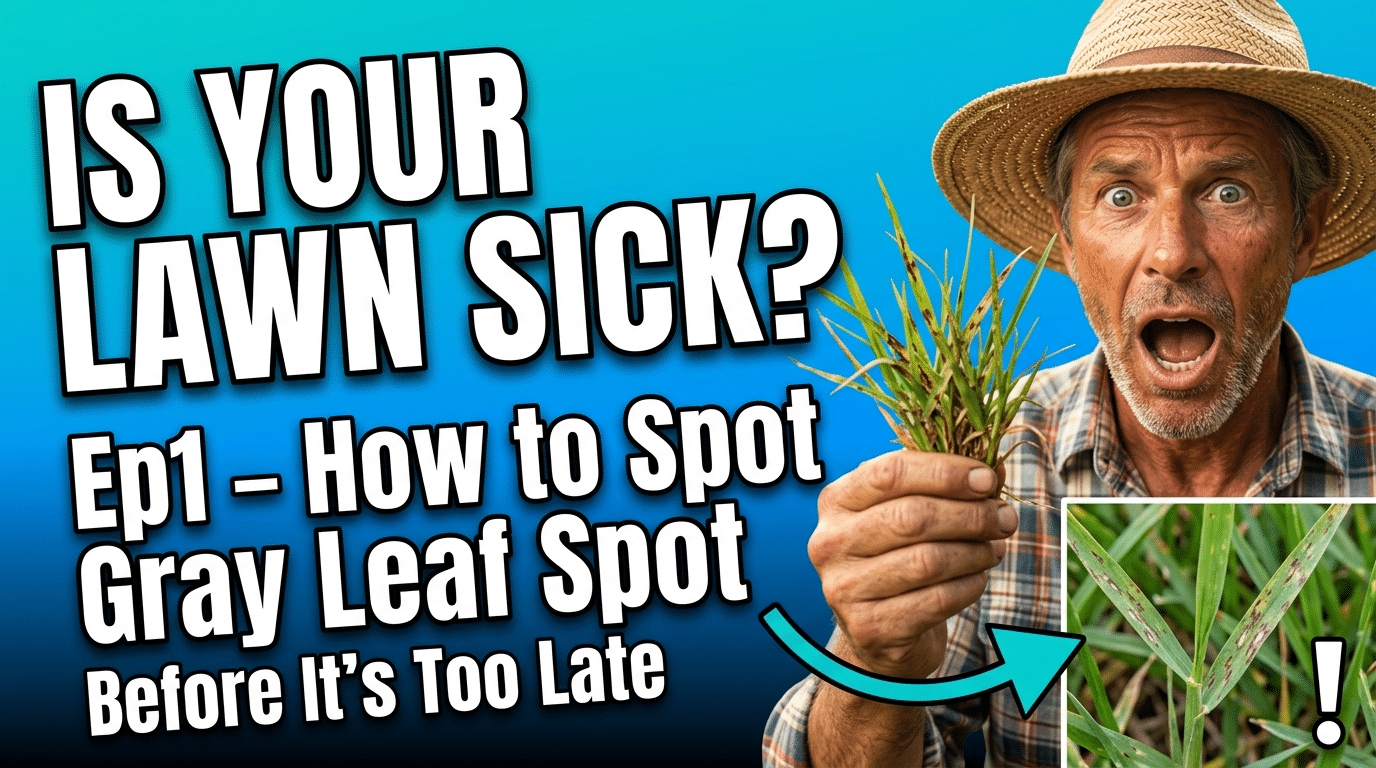
How do I treat gray leaf spot on St. Augustine grass? Look for small gray or brown spots on the grass blades, especially in shady areas, and treat with a granular fungicide such as Heritage G.
How much should I water my lawn in a Houston summer? One inch of water per week, delivered in one or two deep waterings. Consistent watering is also your best defense against chinch bugs.
Gray Leaf Spot: The Wet-Spring Hangover
The Houston area had a very wet May, and much of June stayed damp too. Combine that leftover moisture with July heat and humidity, and you get ideal conditions for gray leaf spot, a fungal disease that loves St. Augustine grass.
How to Identify Gray Leaf Spot
Get close to the grass and look at the individual blades. Gray leaf spot shows up as small, ugly gray or brown dots or lesions on the leaf blades. It tends to appear first — and hit hardest — in the shadier areas of your lawn, where the grass stays damp longer.
How to Treat Gray Leaf Spot
Treat affected areas with a fungicide labeled for gray leaf spot. We recommend and sell Heritage G, a granular fungicide that works well on St. Augustine lawns. Catching it early keeps a few spotted blades from turning into large thin, brown patches.
Chinch Bugs: The Dry-Spell Pest
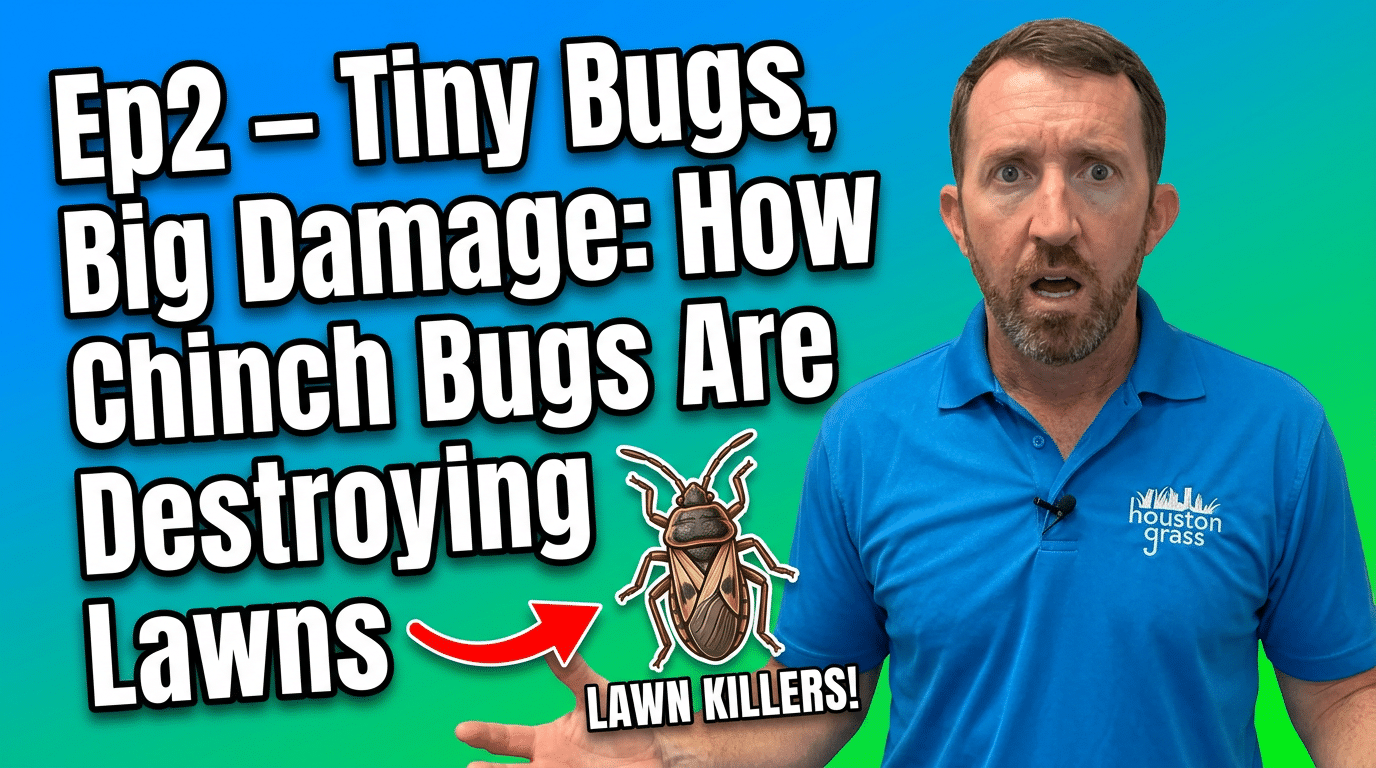
Now that things have dried out, chinch bug calls are picking up fast. Chinch bugs attack lawns that are drought-stressed, and they can do serious damage quickly in July heat.
How to Spot Chinch Bug Damage
Be on the lookout for dried-up, straw-colored patches in your lawn, often starting in the hottest, driest spots (near driveways, sidewalks, and sunny areas). If you see a suspicious patch, get down on your hands and knees at the edge of the damaged area, part the grass, and look for the small bugs themselves.
How to Prevent Chinch Bugs
The single best defense is water. A well-watered St. Augustine lawn is far less attractive to chinch bugs than a drought-stressed one. That means it’s time to turn on the irrigation system or set out the sprinklers.
The One-Inch Rule: Watering Houston Lawns in July
Your lawn needs one inch of water per week during a Houston summer — and it should come in one or two deep waterings, not a light sprinkle every day. Deep, infrequent watering encourages deep roots and keeps the grass healthy enough to resist chinch bugs and recover from stress. Skip the water, and the grass will pay the price.
Not sure how much your sprinklers put out? Set a few empty tuna cans or straight-sided containers around the lawn, run the system, and measure. When the cans hold about an inch combined across your weekly waterings, you’re on target.
Cobalt St. Augustine Is Back This Friday
If you’ve been waiting on Cobalt St. Augustine, good news: it’s back. We’ve been out of Cobalt for several months because our farm only has a limited number of acres of it — it’s been a huge success, and honestly, we wish we could grow more. Fresh Cobalt will be available to order starting this Friday.
And as always, Raleigh St. Augustine is available by the piece or by the pallet, year-round.
Frequently Asked Questions
What causes gray leaf spot in St. Augustine grass? Gray leaf spot is a fungal disease that develops when extended wet weather is followed by hot, humid conditions — exactly the pattern Houston saw this spring and early summer. Shady, slow-drying areas of the lawn are most vulnerable.
What does chinch bug damage look like? Chinch bug damage appears as expanding patches of dry, yellowing-to-brown grass that look drought-stressed even when nearby grass is fine. Confirm by parting the grass at the edge of a patch and looking for the bugs.
Can watering really prevent chinch bugs? Consistent deep watering — about an inch per week — goes a long way toward keeping chinch bugs away, because they target drought-stressed turf. Watering won’t cure a heavy infestation, but it’s the best prevention.
Is Houston Grass open on weekends? Not during this time of year. We’re open Monday through Friday, 8:00 a.m. to 5:00 p.m., and we’re here for your grass needs year-round.
Where does Houston Grass sod come from? Every piece and pallet comes from our family farm in Bay City, Texas. Michael was raised growing grass, and his brother manages the farm today — so you can be confident you’re getting sod with quality second to none in the Houston area.
Questions? Give Us a Call
Whether you’re fighting gray leaf spot, hunting chinch bugs, or ready to order Raleigh or Cobalt St. Augustine, we’re happy to help. Stop by Monday through Friday, 8 to 5, or give Houston Grass a call at 281-431-7441.