
August 8 Update – August Lawn Care in Houston: Shade Solutions and Watering Tips
From Michael Romine at Houston Grass — this week’s yard update.
Quick Summary
Late August in Houston brings two reliable challenges: heavy tree shade and a dry stretch with little to no rain. In this update, we tackle a shaded backyard that lost most of its grass under two large oak trees, explain how removing and thinning trees “buys back” sunlight, and recommend Cobalt St. Augustine as the most bulletproof grass for shady, disease-prone yards. We also break down exactly how long to run your irrigation this time of year, and how to spot and stop the two problems August always brings: chinch bugs and gray leaf spot.
Key points at a glance:
- Thin or remove large trees to bring sunlight back to a struggling shaded lawn.
- Cobalt St. Augustine is our top pick for shade and disease tolerance.
- With no recent rain, run rotor heads ~30 minutes per zone and pop-up/spray heads ~15 minutes per zone, twice a week.
- Full-sun yards may need watering three times a week.
- Watch for chinch bugs (dry conditions) and gray leaf spot (shade + overwatering).
Buying Sunlight: Fixing a Lawn That’s Lost to Shade
When a backyard has two huge oak trees, grass simply can’t compete. Think of grass and trees like roommates fighting over the same Wi-Fi — the trees are streaming in 4K up top, and the grass on the floor never gets enough bandwidth (sunlight) to survive. Over time, you end up with bare, thinned-out turf.
Why Grass Dies Under Big Oaks
Turfgrass needs a minimum amount of daily sunlight to photosynthesize and stay dense. Dense tree canopies block that light, and the shaded, still air underneath also traps moisture — a combination that weakens the grass and invites disease. The result is the patchy, dying lawn many Houston homeowners see under mature trees.
Removing vs. Thinning Trees
You don’t always have to choose between “keep the tree” and “keep the lawn.” In this yard, the approach was to take one oak down entirely and clean up and thin out the second one. Thinning the canopy lets filtered light reach the ground without sacrificing the whole tree — you’re “buying” just enough sunlight for grass to establish and hold on.
Best Shade-Tolerant Grass for Houston: Cobalt St. Augustine
For a shaded, disease-prone backyard, Cobalt St. Augustine is the most bulletproof option we carry. It combines strong shade tolerance with good disease tolerance, which is exactly what you want under trimmed-up trees where light is still limited and moisture can linger. Once the trees are cleaned up and thinned, this grass has a real chance to fill in and thrive.
August Watering Guide for Houston Lawns
By late August, it’s common to go a couple of weeks with no measurable rain. When that happens, your irrigation is doing all the work, and it’s time to run it near maximum. Here’s the schedule we’re running at home and at the office right now.
Rotor Heads
Rotor heads are the ones that rotate back and forth across the lawn. Run these about 30 minutes per zone. Because they distribute water more slowly over a wider area, they need more time to apply the same amount of water.
Pop-Up and Spray Heads
These are the stationary heads that pop up and spray a fixed pattern. Run these about 15 minutes per zone — roughly half the rotor time — since they apply water faster to a smaller area.
How Often: Adjusting for Shade vs. Full Sun
Right now, twice a week is about right for a yard with a fair amount of shade, which holds moisture longer. If your lawn gets full sun, it dries out faster and you may need to water three times a week. Always factor in rain — and in Houston, rain is famously local. One side of town can get two inches while the rest gets nothing, so pay attention to what actually falls on your yard, not just the forecast.
August Lawn Pests and Diseases
August in Houston has a predictable rhythm: when the rain stops, the problems start. Doing your homework — scouting your lawn and adjusting water — is what keeps small issues from becoming big ones.
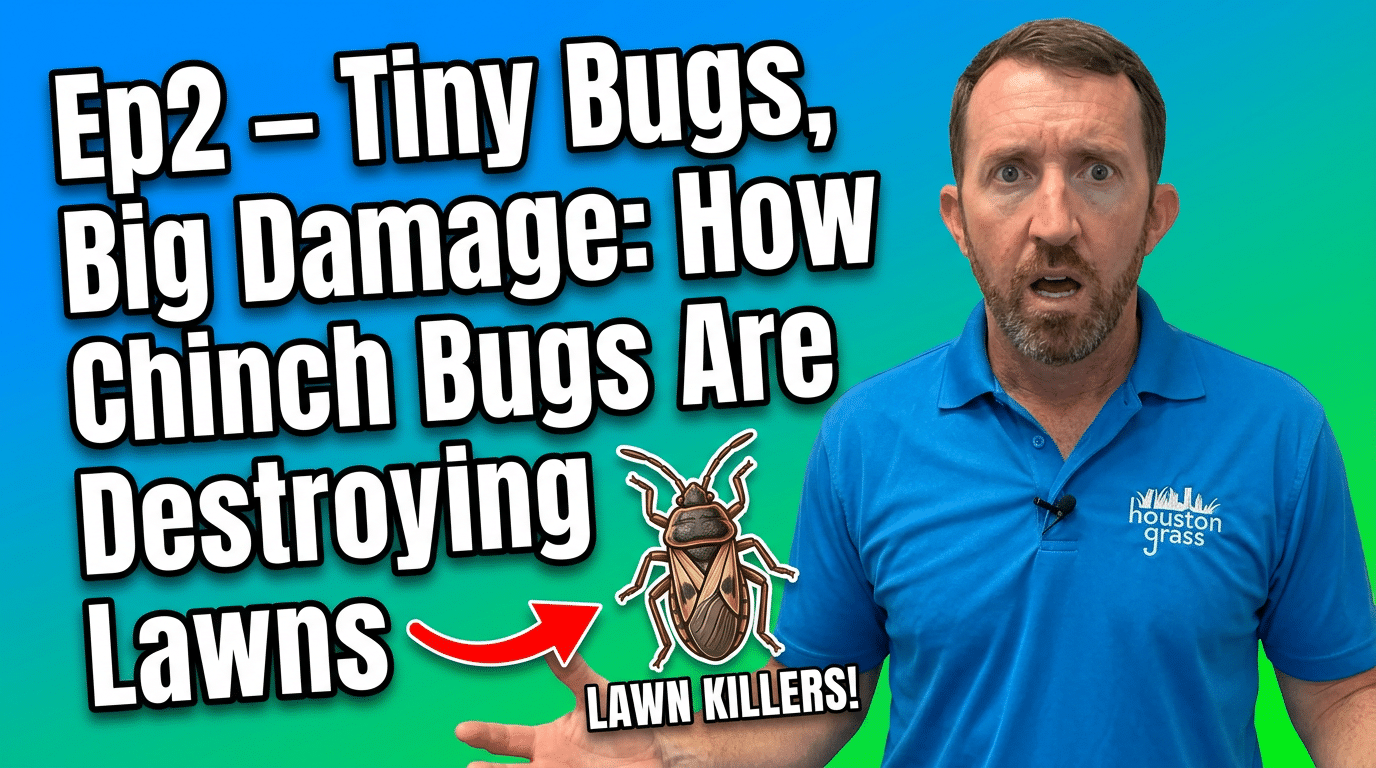
Chinch Bugs
Chinch bugs are the classic August problem, and they show up when it stops raining and the lawn gets hot and dry. If you’re not keeping an eye out, you’ll see them appear — often as spreading dry, yellowing patches. Staying on top of your watering and inspecting stressed areas early is your best defense.
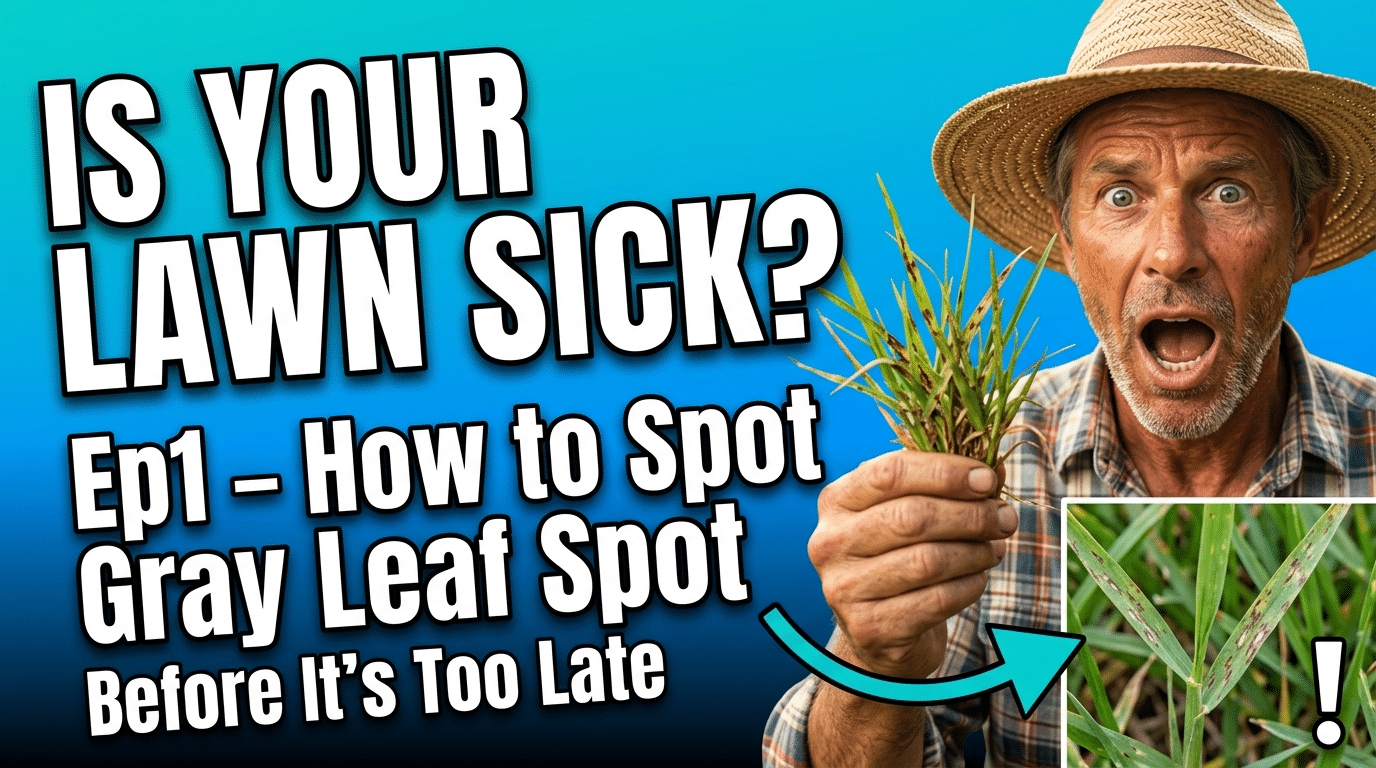
Gray Leaf Spot
Gray leaf spot is the flip side of the coin. It needs excessive moisture to take hold, so you rarely see it in a dry spell unless you’re helping it along. The usual culprit is a shady area that’s being overwatered — the shade keeps things damp, and the extra irrigation pushes moisture past what the grass can handle. If you spot it, treat with Heritage G fungicide and stay on top of the applications.
Key Takeaways
Late-summer lawn success in Houston comes down to managing two extremes at once: get more light into shaded areas, and dial in your watering so you’re not too dry (chinch bugs) or too wet in the shade (gray leaf spot). Thin those trees, plant a tough grass like Cobalt St. Augustine, and match your irrigation to your sun exposure and the rain you actually receive.
Frequently Asked Questions
What’s the best grass for a shady Houston backyard?
Cobalt St. Augustine is a top choice because it offers both shade tolerance and disease tolerance, making it well suited to yards under trees where light is limited and moisture tends to linger.
How long should I run my sprinklers in late August?
With no recent rain, run rotor (rotating) heads about 30 minutes per zone and pop-up/spray (stationary) heads about 15 minutes per zone. Water twice a week for shaded yards and up to three times a week for full-sun lawns.
Do I really need to remove my trees to grow grass?
Not necessarily. Sometimes thinning and cleaning up the canopy lets enough filtered light through for grass to survive. Full removal is one option, but selective thinning can “buy” the sunlight your lawn needs without losing the tree entirely.
What causes chinch bugs in August?
Chinch bugs thrive when it stops raining and the lawn turns hot and dry — the standard August pattern in Houston. Regular scouting and consistent watering help you catch and manage them early.
What causes gray leaf spot, and how do I treat it?
Gray leaf spot needs excessive moisture, so it usually appears in shaded areas that are being overwatered. Reduce overwatering in shady spots and apply Heritage G fungicide, staying consistent with your treatment schedule.
Related Links
Need help choosing or installing grass? We sell fresh grass every day and are happy to answer your questions — give Houston Grass a call at 281-431-7441.